
Green finance for London boroughs: a deep dive into funding options for net zero

London boroughs are actively working to reduce carbon emissions from buildings and infrastructure, with many already making great progress. To continue to deliver and scale up these projects, councils need access to reliable and affordable sources of finance: approximately £35 billion according to the London Net Zero Projects Pipeline database.
The London Borough Green Finance Guide aims to support boroughs with this. Published by London Councils, this guide helps borough officers and councillors to understand the range of repayable finance options available. It outlines practical funding routes and includes case studies, application guidance and sources of support to help boroughs move from planning to delivery.
In this blog, we summarise and highlight the key points from the guide, including links to financial opportunities, case studies and support.
Looking for the right finance or funding opportunity for your project? Check out our Green Funding and Finance Finder to find relevant and applicable support.
What is green finance?
Finance is defined in this guide as repayable sources of money from an external source. This usually takes the form of debt or equity.
Debt financing happens between a borrower and a lender. The former borrows an amount of money from the lender, on the condition that the money is paid back in full, usually with interest. This includes bonds, a form of debt financing where investors lend an organisation money and receive regular interest payments.
Equity financing involves raising money through selling shares of a business. The investors’ interests are usually aligned with the business they have bought equity in.
What are the five key types of green finance?
The guide outlines five main categories of repayable finance:
- Public financing: money from the public sector, that often offer flexible terms and competitive rates for projects.
- Institutional financing: when a company or organisations pools investments from pension funds and similar bodies and invests it on behalf of clients.
- Bank financing: money from commercial or retail banks, usually in the form of a loan. Enfield’s heat network case study shows how banks can invest alongside public funds.
- Community financing: money raised by the community, often residents and business that want to invest locally.
- Blended financing: a combination of public and private capital that generates capital while reducing risk and cost.
Helpful terms and definitions
Gilts are a type of loan that the UK government takes out. When someone lends money to the government, they get paid back with interest.
Basis points (bps) are a way to compare interest rates. They’re often used to show how much more (or less) interest someone pays compared to a standard rate – like the rate the UK government pays when it borrows money (e.g. through gilts).
If someone says “gilts + 40 basis points”, it means the loan costs 0.4% more than what the government pays when it borrows money.
1. Public financing
Public financing often refers to loans and bonds provided by government or government-backed institutions.
Key streams:
- Public Works Loan Board (PWLB) provides flexible loans for capital projects at gilts +80bps. Local authorities can apply directly at any time.
- UK Infrastructure Bank (UKIB) has made £4 billion available for local authorities, with a particular focus on heat networks, building decarbonisation, transport, place-based, solar and flood defence infrastructure projects. Lending at a rate of gilts + 0.4% (40 basis points).
- Greater London Authority Green Finance Fund (GFF) will lend up to £500 million for energy efficiency, clean transport and/or renewable energy projects. Interest rates are at least 20bps below Public Works Loan Board.
- Mayor of London’s Energy Efficiency Fund (MEEF) is a £500 million fund that invests in small-scale renewable energy schemes, decentralised energy schemes, retrofitting and energy efficiency measures.
- London EDGE Fund is a £100 million fund that is accelerating investment into projects that support the Mayor’s London net zero plans.
Case study:
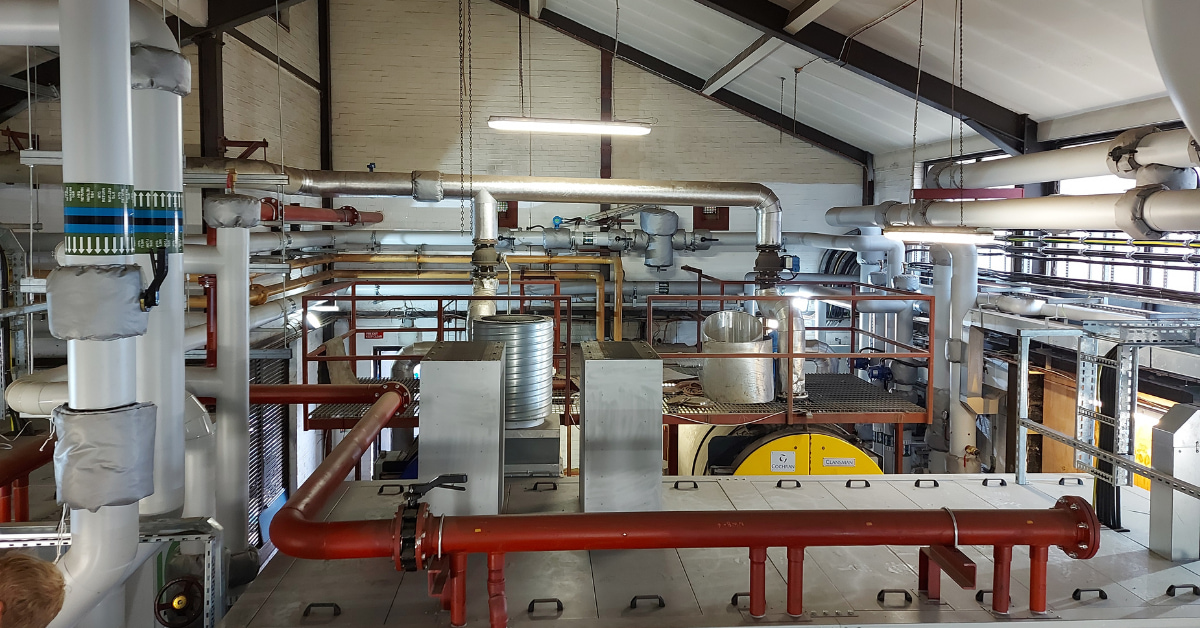
- Southwark Council got a £7 million 15-year loan from MEEF to deliver a ground water source heat pump, serving 2,175 homes across three Southwark housing estates. The project is expected to reduce energy usage by over 34% compared to existing heat systems and create 3.4MW of renewable energy.
2. Institutional financing
Institutional financing offers large scale (£200+ million) options as well as being able to address smaller projects or aggregation of small projects.
Key stream:
- The London Fund aims to invest in real estate, infrastructure and growth capital opportunities in Greater London, with a goal of delivering investment returns and positive social outcomes.
Case study:
- EDGE London Bridge is the development of a 275,000 square feet office building, forecast to emit less than half the amount of carbon emissions compared to similar office towers. The project was delivered through a co-investment by LPPI Real Estate Fund and The London Fund into a joint venture between Goldman Sachs Asset Management and Amsterdam-based developer Edge.
3. Bank financing
Commercial and retail banks offer loans and bonds for projects and business activities as an investment, usually as part of their environmental, social and governance policy framework.
Case study:
- Enfield Council applied directly to MEEF for a loan to support their £6 billion regeneration project. The MEEF loan combines funding from the GLA, Amber Infrastructure and Santander, totalling £15 million. The project involves a communal heat network, supplying heat and hot water through a network of new pipes. The project is forecast to save 4,972 tonnes of CO2 compared to gas. It is also projected to reduce nitrogen oxide released into the atmosphere by 1,600 tonnes from 2026 onwards.
4. Community financing
Community financing allows residents and businesses to invest in local initiatives, sometimes known as crowdfunding.
Key streams:
- Community share offers are a form of equity investment. Local organisations and businesses can raise money by selling shares to individuals, who can cash those shares in the future.
- Community Municipal Investments (CMIs) are bonds or loans issued by councils to the public, and residents can invest as little as £5. The funds can be used for community projects, including low-carbon infrastructure.
- Local Climate Bonds (LCBs): Regulated green bonds for specific decarbonisation projects.
Case studies:
- North Kensington Community Energy (NKCE) is the first community-owned renewable project in Kensington and Chelsea and is helping drive behavioural change and empowering locals to act. NKCE issued community share offers attracting £190,000 from the community, which helped install enough solar panels to save 114 tonnes of CO2 to date and generate a £70,000 community fund.
- Hammersmith & Fulham Council’s Community Municipal Bond aims to raise up to £5 million from their residents to deliver their climate plans. Of the first £1 million raised, 13% of which were local investors.
5. Blended financing
Blended finance combines public and private capital to reduce risk and cost. It could also involve local government grants, carbon offset funds, Community Infrastructure Levy or S106 payments.
Key stream:
- Net Zero Neighbourhoods (NZN) is a new approach to financing local climate projects, especially housing retrofit. It is designed to help boroughs deliver large-scale decarbonisation by combining public funding with private investment, without passing costs onto residents.
Case studies:
- Bristol City Leap is a partnership between Bristol City Council, Ameresco and Vattenfall. Bristol City Leap aims to deliver nearly £500 million into low carbon energy infrastructure, including solar, wind, heat networks, heat pumps and energy efficiency measures.
- Camden Council has developed London’s first localised carbon crediting scheme that allows businesses to offset their emissions by investing in local social housing retrofit projects.
- The Coventry Strategic Energy Partnership is a 15-year contractual joint venture between Coventry City Council and E.ON which will focus on innovative decarbonisation solutions. As of October 2025, this partnership has helped save 2,330 tonnes of CO2 and completed 4,000 heat scans of properties.
For more detail about each type of green financing, check out the full London Borough Green Finance Guide.
This post shares information only and is not financial advice. All loans and finance opportunities are subject to terms and conditions.