
Case study: London Stadium, London Legacy Development Corporation
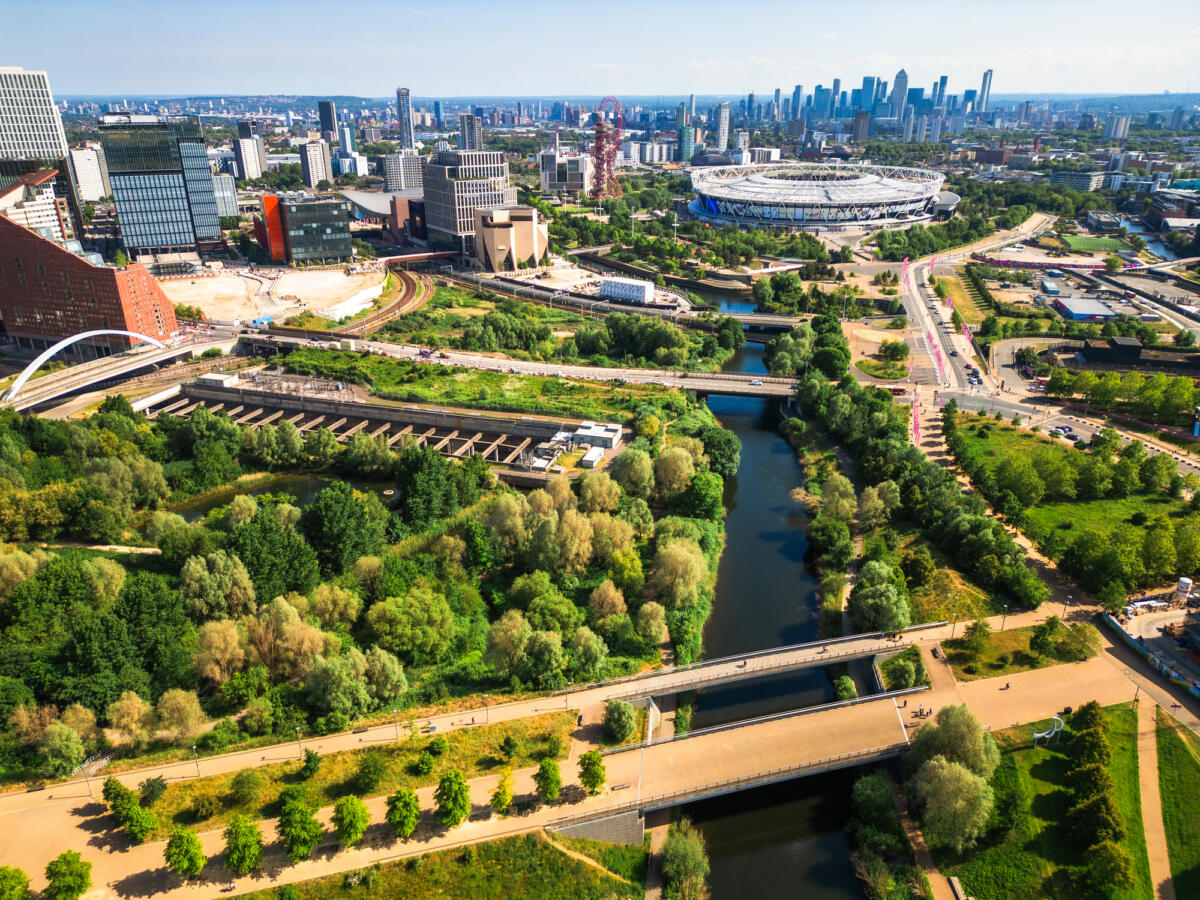
Exploring heat recovery from London Stadium chiller units with a view to supporting the decarbonisation of the district heat network.
What is the project?
The Queen Elizabeth Olympic Park district heat network exclusivity zone legally requires all buildings in the area to connect to their heat network and restricts them from installing their own heat generating technology. This project was carried out with Bring Energy, who operate the zone, to decarbonise the network and to evolve/refine the decarbonisation roadmap developed between 2023 and 2024.
The emphasis was to recover waste heat sources across Queen Elizabeth Olympic Park. Operational staff highlighted London Stadium as having a high chilled water load, presenting an opportunity for waste heat recovery. This could aid the wider decarbonisation of East London Energy, the heating and hot water supplier to the Queen Elizabeth Olympic Park.
The Zero Carbon Accelerator worked with Arup to help identify the technical options for heat recovery and the potential for the stadium’s Building Management System (BMS). Read the full heat decarbonisation feasibility study from Arup.
Outcomes
This piece of work has been essential in understanding the potential scale of heat recovery from the stadium and opportunities to displace the ‘last stage projects’.
The network aims to reduce the end cost of heat for users by having as few assets as possible. The fewer assets there are on the network, the lower the overall capital expenditure, operational expenses and replacement expenditure will be.
The study concluded that the amount of heat that could be recovered from onsite chillers would not be enough to displace another asset. This suggests an unfavourable commercial return on investment for waste heat recovery from the chiller units.
The final report did identify an opportunity to optimise the stadium’s BMS, and the ‘easy’ savings that can be made through some simple interventions. The building’s energy consumption is now being monitored to understand the benefit of these findings by comparing like-for-like months from last year and the coming year.
The report also details low carbon technologies that could be installed at London Stadium. Though these do present a commercial conflict with the exclusivity zone, a project of a certain scale could be of interest to Bring Energy. This means the findings of the report may be of value in future if the price of energy and/or heat recovery changes, altering the commercial return on investment. Bring Energy’s current is keen to explore the opportunity of thermal storage and to optimise the current system in partnership with Bring’s asset improvement team.
Potential and actual carbon reduction delivered
This project support avoided significant public expenditure which progressing with the project could’ve incurred.
The roadmap was further developed in 2024 to scale up technologies and reduce the end cost of heat to customers. To achieve this, the included projects focused on large scale assets (>3MW) with the aim of utilising energy centre space and waste heat in as a priority. The ‘last stage projects’ currently involved air source heat pumps, and the ambition is to replace these with more efficient technology where the opportunity is available.
Though the initial premise of the feasibility study was to consider heat recovery from chillers, the focus on the stadium’s heating and cooling demand led to opportunities being identified to improve the efficiency of the (BMS).
The report identified BMS optimisation savings of approximately 62-125 tCO2e/year, equal to 360,000-720,000 kWh/year.
In the future, this is estimated to save 980-1875 tCO2e over its 15-year lifetime.