
Mott MacDonald: our view on what’s helping London decarbonise, one year in
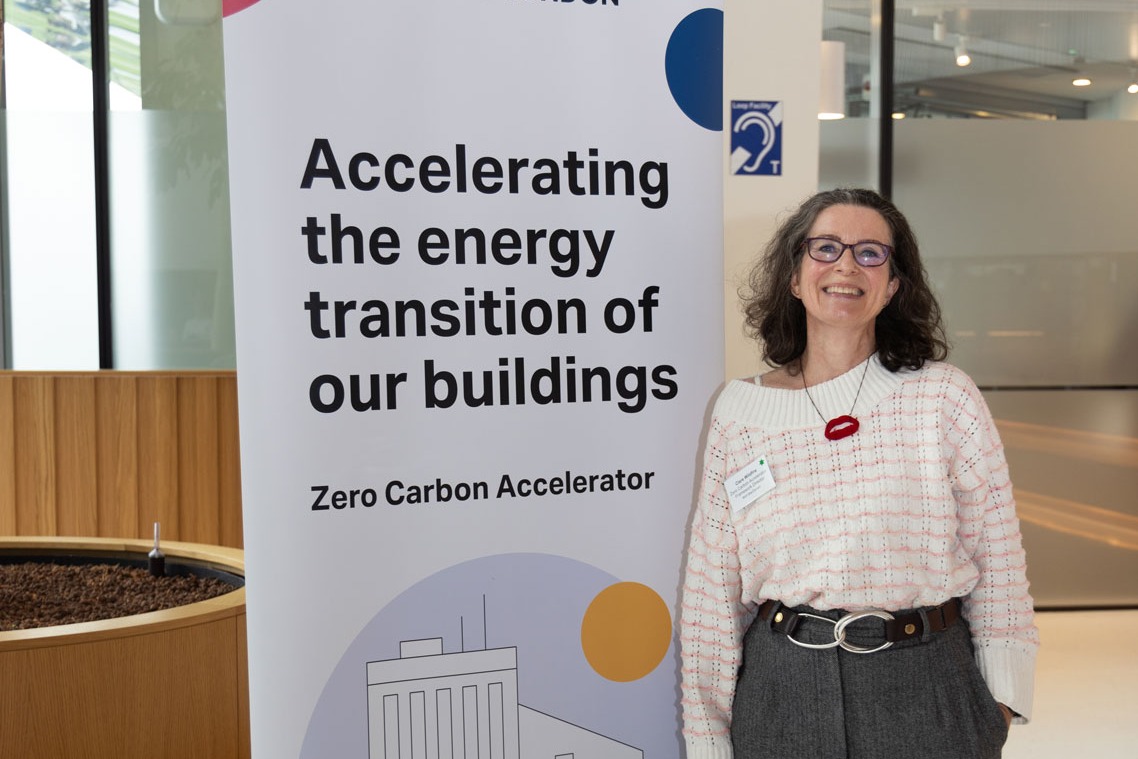
“Collaboration can be the key to achieving the economy of scale that attracts investment and reduces the cost of delivery.“
The Zero Carbon Accelerator combines decarbonisation expertise from 14 organisations to help London-based public sector bodies accelerate their journey towards net zero.
In this blog series, we’re introducing each of these 14 alliance members, sharing more about their unique and special skillset, and how they are enabling organisations across London to reach net zero through the Zero Carbon Accelerator.
In this blog we hear from Clare Wildfire, Mott MacDonald’s Global Cities Lead, on the first anniversary of the programme.
What is Mott MacDonald’s role in the Zero Carbon Accelerator?
Clare: As lead delivery partner, our role is to create a smoothly running programme that is easy to navigate for organisations. We lead the Zero Carbon Accelerator’s Alliance, connecting organisations with this vast bank of expertise to help them accelerate towards their individual decarbonisation goals.
We also apply a strategic lens, combining programme insights and our wider Alliance experience to create activities that bring tangible impact for London and beyond. We do this whilst considering and responding to changes in local and national policy direction.
The Zero Carbon Accelerator is an exciting and ambitious programme that builds on the long and strong legacy of the Mayor of London’s previous Low Carbon Accelerators. We have settled into a strong rhythm and, looking back over the past year, I think the three biggest components of our acceleration journey are collaboration, replicability and the connection with investment.
What approaches to decarbonising buildings are proving most replicable?
Clare: Identifying and promoting replicable solutions is a huge part of accelerating London’s decarbonisation journey. Some of the programme’s strongest impacts this year have come from identifying models that can be replicated in multiple similar situations.
For example, one borough’s housing retrofit approach, used across 750 low-, mid- and high-rise homes, is now being explored by others that have similar building stock. The approach aims to reduce gas use by around 75% while retaining a small backup for resilience.
With so many buildings in London to tackle, it is important to be able to quickly categorise building types and identify the appropriate solutions. The Alliance’s capabilities include some exciting data analytics, AI and archetyping tools to support this approach including the Transform-ER retrofit system developed by Ambue and Energiesprong UK.
Replicability isn’t always about technology, though. It often comes from being able to generate confidence in new forms of business models, ones which effectively balance carbon reduction, cost-effectiveness, and speed of deployment. By documenting successful approaches and sharing them through our Knowledge Hub, we’re making it easier for others to follow. It is encouraging to see interest in these outputs; in learnings that strike this balance.
How are you helping organisations with funding and investment?
Clare: Securing funding for decarbonisation projects is a big challenge. We know this, and are actively focusing on it in this coming year. Part of this is helping organisations access grant funding from national or regional programmes, creating standardised solutions and partnerships that can improve likelihood of success.
Off balance sheet and investible decarbonisation solutions are equally as important and rapidly evolving. Investors are embracing the opportunity and developing new business models to monetise the decarbonisation imperative. The Green Finance Fund is an example of this.
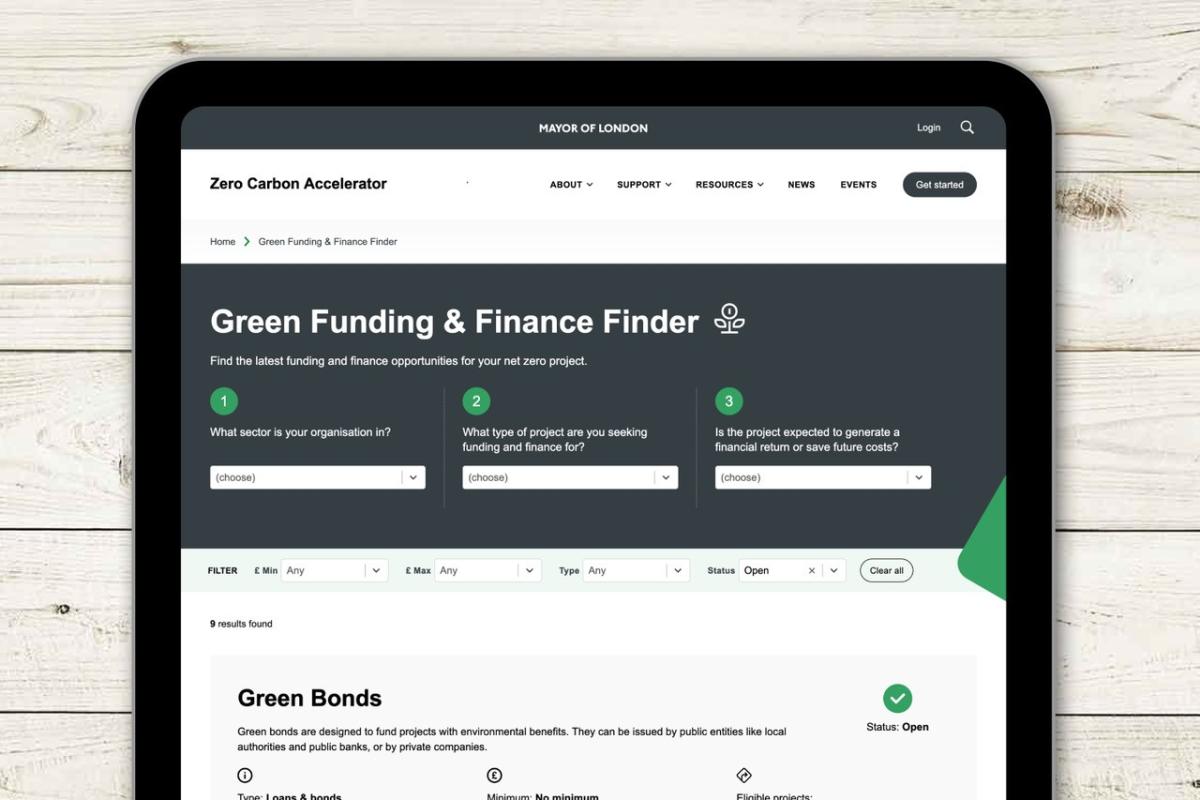
We also recently launched a free online tool, the Green Funding and Finance Finder, to help organisations find appropriate finance and finance opportunities – and were delighted by the interest and enthusiasm. We know the uncertainty and changing landscape affects organisations as they look for funds. This tool is one way of making the process easier. After identifying the relevant opportunity, organisations can get support from our Alliance to take the next steps.
How do you balance ambition with delivery reality?
Clare: We have been helping organisations identify ‘least regrets’ approaches. This captures what’s viable now whilst maintaining the flexibility to navigate changing circumstances and pivot when opportunities arise. This allows organisations to maintain momentum without losing sight of strategic goals. It’s about turning ambition into action without letting perfection or procrastination delay progress.
We see many public sector organisations committed to ambitious net zero targets, but their path to delivery varies widely. Even if the focus is on implementing high-impact, fundable measures now, such as solar PV or fabric-first retrofit, it is important to embed these within a broader, longer-term plan.

“If we only chase perfection, nothing will get built. The real challenge is making decarbonisation deliverable at pace, with the funding, skills and systems we already have.”
Andrew Wholley, Technical Principal at Mott MacDonald
How can collaboration unlock new opportunities?
Clare: Collaboration can be the key to achieving the economy of scale that attracts investment and reduces the cost of delivery. Decarbonising at scale often requires new partnerships that cross geographical boundaries or sectors. These partnerships can only succeed by nurturing relationships, identifying shared objectives, and understanding complexities.
The Zero Carbon Accelerator has enabled boroughs to work together in ways that would have been otherwise difficult. In North London, it has been exciting to support five boroughs to join forces on a strategic heat network to share waste heat sources. Similar partnerships are emerging in South and Central London: we are connecting boroughs with waste-to-energy suppliers and exploring options such as thermal barges and Thames-based heat pipelines. These projects show how shared ambition and shared infrastructure can accelerate progress.
We are also helping members of the Greater London Authority (GLA) to combine their renewable electricity purchasing power. For the Old Oak and Park Royal Development Company (OPDC) we are helping to establish what could be London’s largest solar project. This builds on the previous work undertaken as part of the OPDC Local Area Energy Plan and identifies the best solar or smart energy grid solution and delivery model for the area.
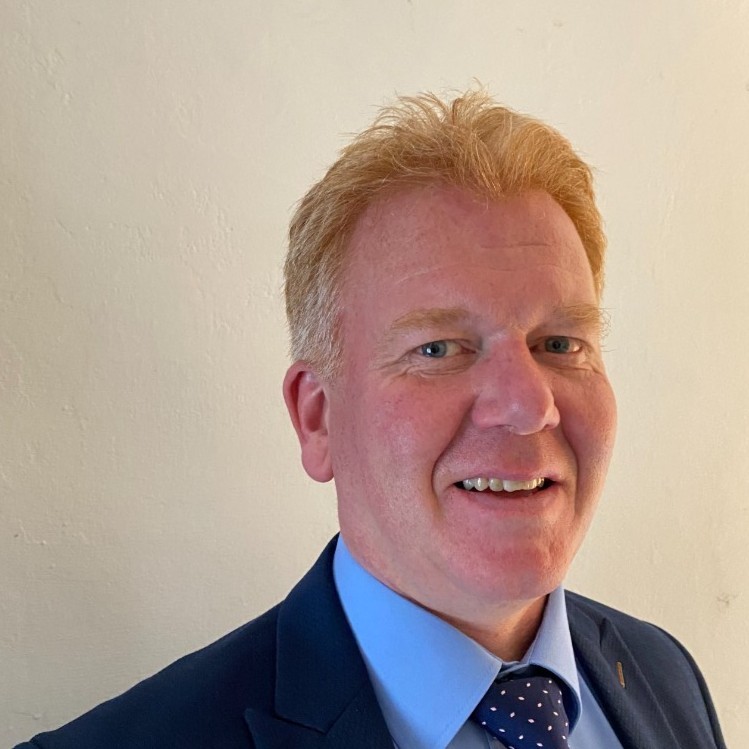
“We’re often the convenor, helping organisations find the right match of advice, finance, and peer organisations facing similar challenges.”
Neil Smillie, Heat Network Specialist at Mott MacDonald
How can social value be embedded in decarbonisation projects?
Clare: Investment in decarbonising London should do more than just reduce carbon. I believe we all have a part to play in that.
We see the power of collaboration firsthand. We’ve brought financiers, procurement specialists, technical experts and resident engagement teams together so that our combined actions can grow our impact. Together, we can reduce fuel poverty, create local jobs and improve wellbeing, alongside cutting carbon emissions. Large estate and retrofit redevelopment projects are a good opportunity for this.
We are putting this into practice for the Zero Carbon Accelerator, supporting London boroughs and housing providers to integrate social value considerations from the outset, as we know that an embedded approach delivers better outcomes for communities.
How does the Zero Carbon Accelerator connect with other programmes in London?
Clare: London has many impactful city-wide programmes underway, and we make sure our work adds value rather than duplicating effort.
For example, residential retrofit projects supported through the Zero Carbon Accelerator connect with the Mayor of London and London Councils-led Warmer Homes London programme. Our work with schools in London Borough of Enfield ties into the Mayor of London’s Greener Schools programme. Lessons from London’s heat decarbonisation work are feeding into GB Energy and other national initiatives from London’s heat decarbonisation work are feeding into GB Energy and other national initiatives.
This way, progress in one programme becomes momentum across the capital, and beyond. As well as supporting London, the Zero Carbon Accelerator Framework is available to public sector bodies across the UK.
The Mayor of London is delivering the Zero Carbon Accelerator in collaboration with Mott MacDonald, Energy Saving Trust and an alliance of experts: ACA Studios, Altair, Ambue, Arthian, ClimateView, COWI, EEVS, Energiesprong UK, ERM, IES, Pascall+Watson Architects, Pollard Thomas Edwards, Retrofit Academy, S&J Consulting and Zerogram.
To stay up to date with more content like this, sign up to the Zero Carbon Accelerator newsletter.