
EEVS: increase investment and carbon savings through measurement and verification
“Measurement and verification can build confidence in project savings delivery, making it more likely to attract further investment.”
Our Alliance is made up of 17 leaders in sustainability, supporting organisations on their journey to net zero. We’re introducing each alliance member, sharing more about their unique and special skillset, and how they are supporting organisations across London to reach net zero through the Zero Carbon Accelerator.
In this blog, EEVS sheds light on what effective measurement and verification is, and how it can result in better results and attract further investment.
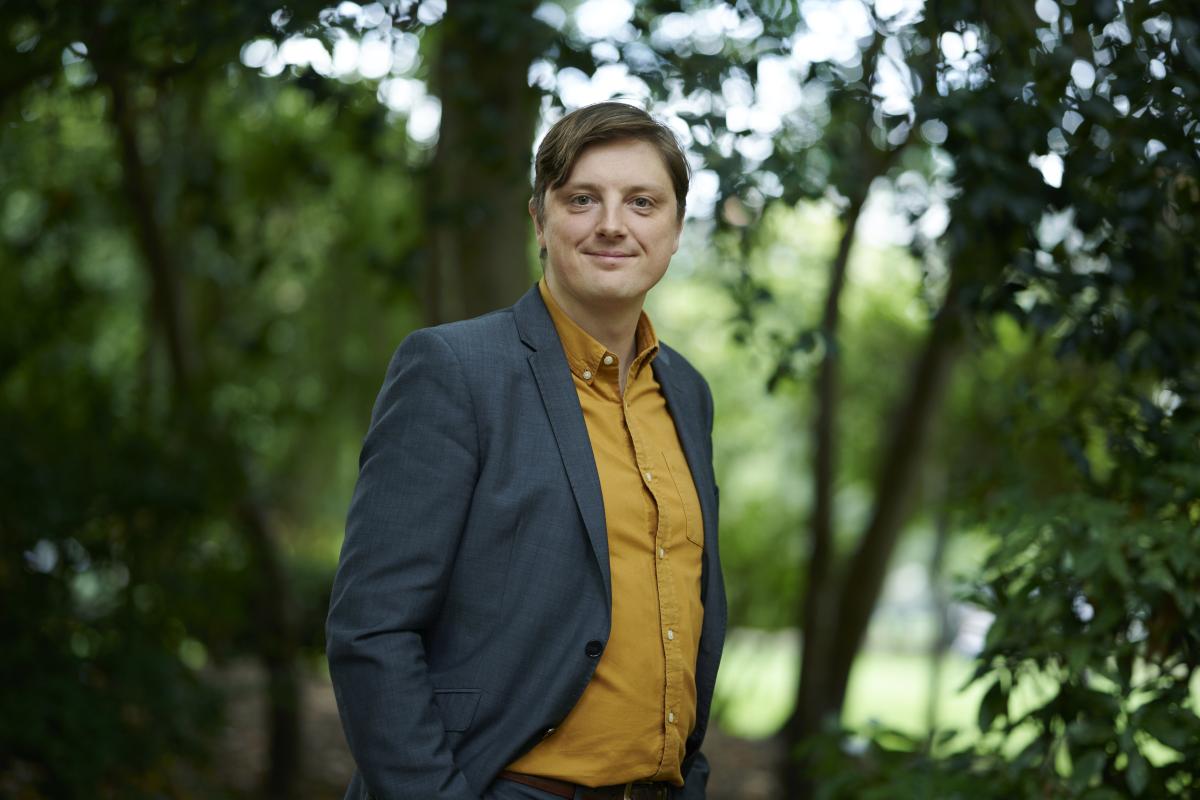
Meet alliance member Nick Keegan, Director at EEVS
How can you help organisations requesting support from the Zero Carbon Accelerator? What sets you apart?
Nick: We’re independent experts that look at how to measure energy and carbon savings from projects, known as measurement and verification (M&V).
Efforts to simply compare bills or usage before and after a project often end up on the rocks. M&V is the process of isolating the energy impact of a project from all the other factors that affect energy use. To really understand the impact of your decarbonisation project, you need to evaluate ‘avoided energy’. This is the difference between what you would have used if you hadn’t done a project and what you actually used. The important thing is to account for changes affecting your baseline – outside the project scope – such as weather conditions, occupancy, or even other energy saving projects, to accurately estimate what you would have used. There’s a globally recognised standard – the International Performance Measurement & Verification Protocol (IPMVP) – that provides guidance.
We’ve helped design, operate and verify savings measurements processes for 70 projects in the public sector worth over £150 million in investment. In London, we’ve been working on the RE:FIT (or Retrofit Accelerator – Workplaces) programme for over 10 years, and helped organisations across the country with their Public Sector Decarbonisation Scheme (PSDS) projects. If you’ve recently received funding from PSDS Phase 4, now is a crucial time to lock in your M&V process.
We are also completely independent. This allows us to sit as an objective and trusted third-party, bringing confidence in the results and facilitating performance accountability processes.
How can measurement and verification (M&V) save money and carbon?
Nick: If you aren’t measuring the impact of your project, you might be missing out on savings. For example, we’ve seen organisations install heat pumps as a main heat source, only to find gas backup boilers are running much more than intended, indicating a control issue. Accurate M&V can help increase energy savings by helping you identify issues quickly, resolve them and figure out what solutions work best.
“Having a measurement plan in place shows investors how you are going to keep the project on track and maintain performance.”
Once you’ve used M&V to build confidence in project delivery, you are more likely to attract further investment. People are happier to fund a project that is supported by independently verified results. Having a measurement plan in place shows investors how you are going to keep the project on track and maintain performance.
M&V can also help identify the most successful carbon saving technologies, services, and suppliers and avoid pitfalls. This is a great opportunity to learn from experience to better support our zero-carbon future.
Are there any resources or tools that you think are most important to organisations as they decarbonise their buildings?
Nick: The International Performance Measurement and Verification Protocol (IPMVP) is free to download from the Efficiency Valuation Organisation (EVO) website. It lays out the guiding principles and methods while describing the important steps in the M&V process that will build trust in the outcomes. EVO also offers a selection of best practice guides and examples.
While the IPMVP provides a solid framework, it needs to be carefully applied to each project. EVO have developed a professional training and certification programme to sit alongside IPMVP – look out for Performance Measurement & Verification Analysts and Experts (PMVA and PMVE – EEVS has 4 PMVEs). In addition, they stipulate independent verification where a project supplier’s remuneration is linked to measured savings, such as in gain shares or energy savings guarantees like those used in RE:FIT.
We have a popular introductory M&V training course that helps people understand the practicalities, principles and standards from theory to execution. Hundreds of people across the country, and globally, have done it.
What kind of decarbonisation projects has EEVS worked on?
Nick: Sometimes an organisation will procure an energy services company to deliver a project and do the savings measurement – but then appoint us as verifiers to confirm the accuracy of the reporting and help improve the process.
Alternatively, we lead the savings measurement process ourselves. For example, Lambeth Council has a project that involves LED lighting replacements, solar PV, and heat pumps in leisure centres and schools – we did the M&V planning for this, and we’ll do the reporting when it’s finished. The City of London asked us for a review of their supplier’s M&V plan when delivering various energy efficiency upgrades at the Barbican and Guildhall complex. We recently completed M&V planning for Kingston Hospital – they’re running a RE:FIT project where they’re de-steaming the site and working on water savings.
We can also train people. My colleague Hilary Wood and I are both EVO accredited trainers. Hilary is one of the few people in the world that can teach the most advanced qualification, Performance Measurement & Verification Expert.
What do you think is the most important part of the decarbonisation journey for organisations to think about?
Nick: Focus more on savings delivery, not just implementation. If you aren’t measuring the carbon saving impact of your work, how do you know whether you’re getting what you paid for? How else are you able to hold your suppliers to account for their performance? How do you know if your efforts are effective?
Maintenance factors into this too. Getting new technology installed is great, but it goes beyond just implementing it. Things like heat pumps and heat networks need strong operations and maintenance programmes – supported by continuous measurement – to make sure they’re kept to a high level of performance.
For any organisation working towards net zero: what’s one piece of advice you have around collaboration?
Nick: Don’t leave savings measurement planning (and budgeting) too late – talk to us right from the start!
It often ends up being an afterthought – “we’ve done the project, now let’s evaluate it.” You can do it at that stage, but you may have big gaps in your data or your evidence base (what has changed since your project started), which makes the evaluation much less certain.
Once you have a project in mind you should get in touch. We can start designing the measurement processes and potentially identify the gaps in your metering, so you’ll be able to collect more accurate baseline data.
The Mayor of London is delivering the Zero Carbon Accelerator in collaboration with Mott MacDonald, Energy Saving Trust and an alliance of experts: ACA Studios, Altair, Ambue, Arthian, ClimateView, COWI, EEVS, Energiesprong UK, ERM, IES, Pascall+Watson Architects, Pollard Thomas Edwards, Retrofit Academy, S&J Consulting and Zerogram.
To stay up to date with more content like this, sign up to the Zero Carbon Accelerator newsletter.