
ACA Studios: a holistic and sustainable approach to architecture
“We’re good at solving problems to tackle the housing crisis with sustainability and decarbonisation in mind.”
Our Alliance is made up of 17 leaders in sustainability, supporting organisations on their journey to Net Zero. We’ll be introducing each alliance member, sharing more about their unique and special skillset, and how they are supporting organisations across London to reach net zero through the Zero Carbon Accelerator.
Here we’re introducing ACA Studios, to share some insight on how they tackle the housing crisis with sustainability and decarbonisation in mind.
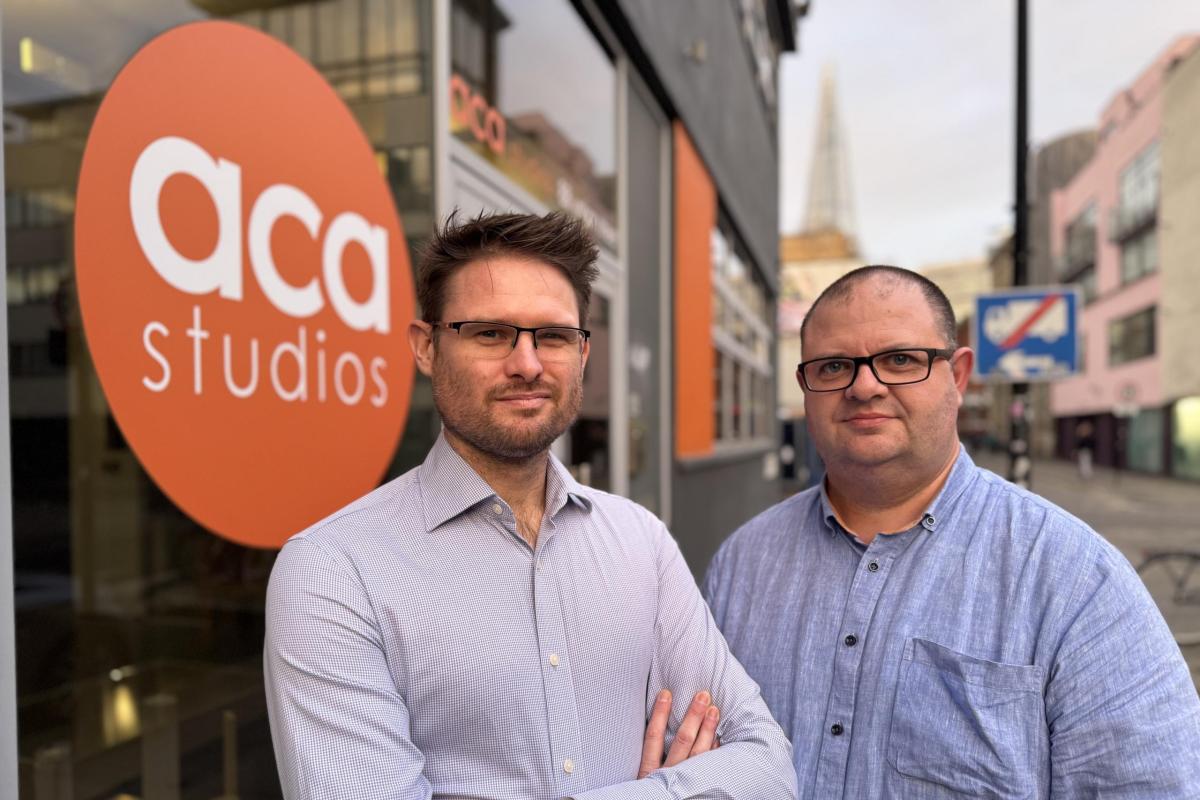
Meet alliance members Ben Ross Mowat and Simon Camp
What unique skills does ACA Studios bring to the Zero Carbon Accelerator?
Simon Camp: One of our strengths as a practice is we look at every stage of architecture and design, a holistic take from start to end of a building project. We’ve got people that look at the feasibility stuff, and we blend this all the way through our projects. We know what can be delivered and what’s buildable. We know how all the regulations are changing and how we can incorporate them. We don’t say “in theory, here’s a great concept but you can never get it built”.
We’re good at solving problems, proposing solutions when the question is ‘how we can get things to work?’ to make wins for all parties and tackle the housing crisis with sustainability and decarbonisation in mind.
Can you share an example of your work?
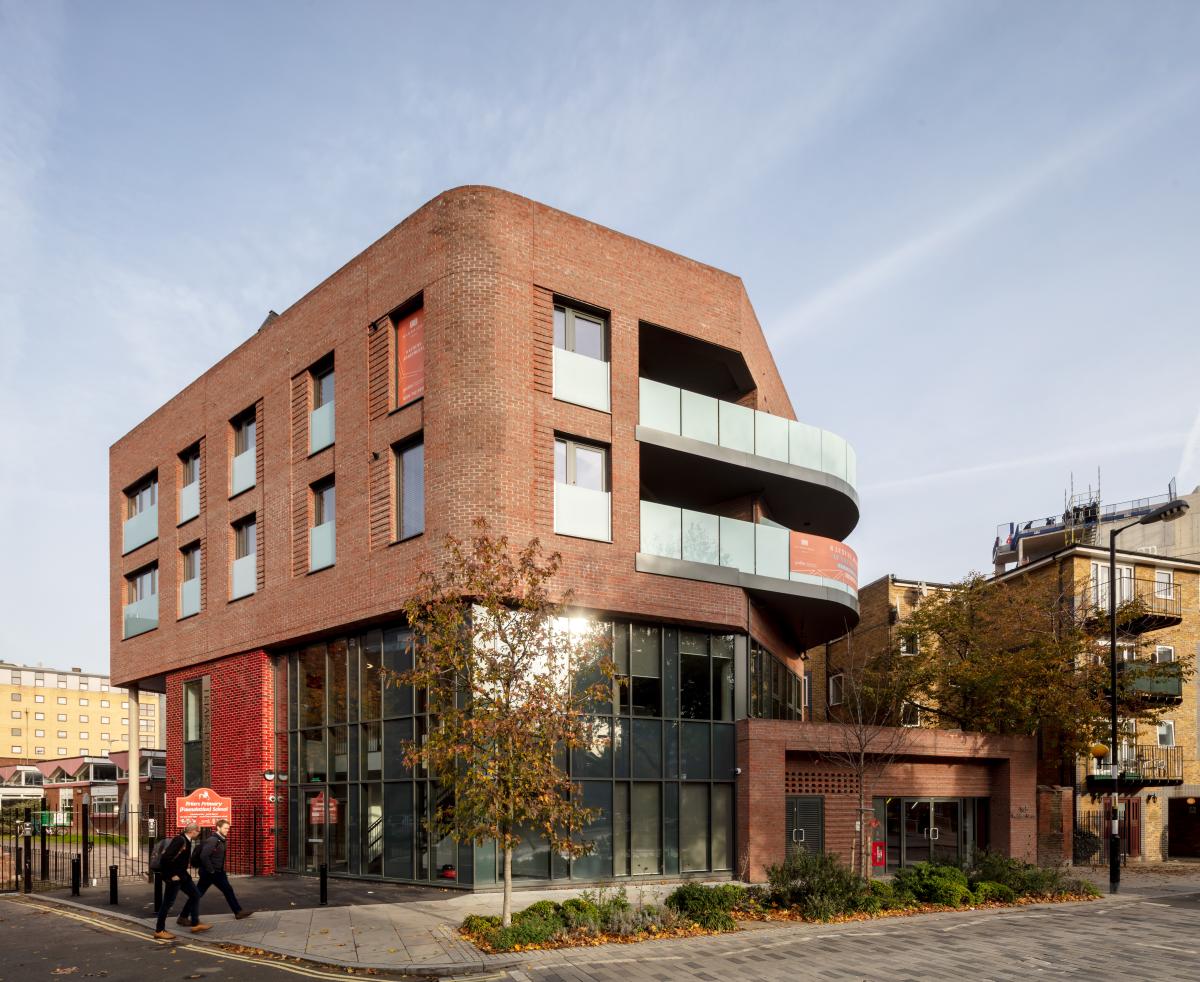
Simon Camp: A great example that really shows how we work was the work we did with the Friars Foundation Primary School (pictured). The school wanted to maximise what they could do with their space within their limited budget. To do this, we proposed they build residential accommodation above the school and brought in an external developer, which helped to minimise the cost for both parties. A real win-win for everyone. We introduced sustainable features – for example, air source heat pumps that help both the school and the residential developer.
Ben: We have to consider the fact that a lot of the progress towards net zero is led by the economic situation and the economic feasibility. Projects won’t succeed if there isn’t an economic case.
There are so many opportunities like this across London. The value we can add early doors is dreaming up concepts and thinking, “we’ve got this site, what can we do with it?” and coming up with ideas that maybe people haven’t thought of before. Being so deeply embedded in the industry means that we can come up with concepts that will work.
The most visual one would be TfL sites where you’ve got a station that is designed to have a building go on later. That takes a developer deal or a joint venture of some sort, just like the Friars School. But that doesn’t just apply to schools and stations – it could be a whole NHS property. There’s nothing in theory that could stop 2,000 flats going above a big hospital like St Thomas’ Hospital, for example.
Why did your organisation want to be part of the Zero Carbon Accelerator alliance?
Ben: We’ve worked mainly in London for 32 years now and realised what a great opportunity this would be to contribute to, considering the kind of value we could provide. We’ve got deep connections with a lot of the councils, and we know how to get things through planning permission. Our friends at Pascall+Watson Architects alerted us to the Zero Carbon Accelerator. We realised that between us, we cover pretty much every sector you could ever want from an architect, so we joined the Alliance together. Whether you’re looking at building a net zero carbon prison, school, housing over TfL, you name it.
How is your organisation contributing to the Zero Carbon Accelerator?
Ben: As architects we have quite a broad range. The vast bulk of our hours of work is delivering projects but the likes of Simon will spend a lot more of his time on the strategy side of things and the advising. And I think between us we believe we’ll initially be most useful when it comes to feasibility studies. We can suggest ambitious ideas that are achievable rather than just the selling an aspiration that will never get developed. Later, we’ll be able to help bring those feasibility studies into reality.
“We have to consider the fact that a lot of the progress towards net zero is led by the economic situation and the economic feasibility.“
What do you think is the most important part of the decarbonisation journey for organisations to think about?
Ben: As architects we’ve got a lot of tick boxes to meet. We’ve got building regulations, we’ve got all the planning conditions, we’ve got secure by design certificates, LEED certificates, SAP ratings – there’s a lot that we must comply with. So, it’s important to think about all this early in the process.
Passivhaus is an obvious win for us. It’s probably the most famous and one of the most rigorous and worthwhile solutions that organisations should look into. It’s analogous to building regulations, but it’s a lot more in-depth. It does require additional cost, but the theory is that the long-term running costs of the building are lower.
Simon: We bake in some of those Passivhaus principles in our work and try to embed sustainability features from the start. On one project, we found that the client didn’t want to consider Passivhaus principles because of the additional costs that it would incur. What we did was embed opportunities in such a way that if the client did want to spend money this later, they could.
Are there any resources or tools that you think are most important to organisations as they decarbonise their buildings?
Ben: I find that generally people struggle to know how to move things forward. We spend a lot of our time telling people how they move their project forward and helping them to move it forward. So, any resource that helps people to know what to do next.
The Zero Carbon Accelerator’s Knowledge Hub contains a wealth of in-depth resources, but if a client is looking for an overview of what is involved in a build project then The RIBA Plan of Work 2020 is your starting point.
What excites you most about the journey to net zero for London?
Ben: I love to see new technology being utilised and it’s great that heat pumps are now being used everywhere. But I think there’s a lot more scope for district heating adoption. This technology exists, but it’s by no means rolled out everywhere that it could be.
Dense cities are such a great opportunity to use these technologies which aren’t yet feasible elsewhere. I’m excited that we’re trying to bundle projects together in the Zero Carbon Accelerator and encourage collaboration when organisations are all in one area or if they have repeatable elements.
Every single building is a prototype in some ways. We only get to build our buildings once, so anything that can be re-applied, new technologies, new systems, new processes, from the get-go, excite me.
For any organisation working towards net zero: what’s one piece of advice you have?
Ben: Identify quantifiable measures of energy efficiency performance with your design team at an early stage, and make sure those measures are built into the main contract as explicitly defined deliverables.
For example, achieving a high air tightness rating is an extremely effective and measurable way of reducing a building’s heat losses, but can be hard for typical builders to achieve – flagging this early as a specific project requirement and checking on their progress throughout the design and construction process will help ensure the final product meets the original ambitions. can help you establish how you’re going to procure the solutions you need and help in successfully contracting for their delivery.
The Mayor of London is delivering the Zero Carbon Accelerator in collaboration with Mott MacDonald, Energy Saving Trust and an alliance of experts: ACA Studios, Altair, Ambue, Arthian, ClimateView, COWI, EEVS, Energiesprong UK, ERM, IES, Pascall+Watson Architects, Pollard Thomas Edwards, Retrofit Academy, S&J Consulting and Zerogram.
To stay up to date with more content like this, sign up to the Zero Carbon Accelerator newsletter.